Only the best from a bulletin board full of experience in such varied interests as poultry, art, good food, and Ohio history.
Come along on the adventure!

Be sure to also check out ohloveofgeocaching.com for travel and caching adventures!
Showing posts with label Air Force Museum. Show all posts

Saturday, July 26, 2014

Apollo 15

Ohio History
Command Module
Satellites were not the only vehicles to enter space. Exploration of the moon set a new goal for the world powers. And it did not end with putting a man on the moon. Tests and observations of the moon continued. This Apollo 15 Command Module, Endeavor, was the fourth of the Apollo missions to land astronauts on the moon. It made its flight in 1971, taking four days to get to the moon and spending almost three days there. The crew conducted experiments and took photographs. The Apollo spacecraft had three major components: the command module, the service module and the lunar module. The service module carried equipment, as well as containing support and propulsion systems; the two crewmen traveled to the moon's surface in the lunar module. They returned to earth in the command module. It measures about 10 1/2 feet high and less than 13 feet in diameter. We read that the size inside is about the same as a minivan - it's hard to imagine traveling through outer space in that!

Thursday, July 24, 2014

Satellite

Ohio History
DSP Test Satellite
Finally, we reached the last section of the museum: space. Space innovation really advanced during the Cold War "space race" of the '60s. Satellites were the first goal, both for spying and for information transmission. The 35-foot-high spacecraft above was a test vehicle for the Defensive Support Program begun in 1970. It was an alert system that could sense thermal radiation from rocket launchers using infrared detectors. This allowed an earlier warning system for imminent missile threats. It was amazing how big it looked in the museum, compared to the pictures we see of satellites in orbit in space. These DSP satellites, as they are called, are still in use today.

Tuesday, July 22, 2014

Inside Air Force One

Ohio History
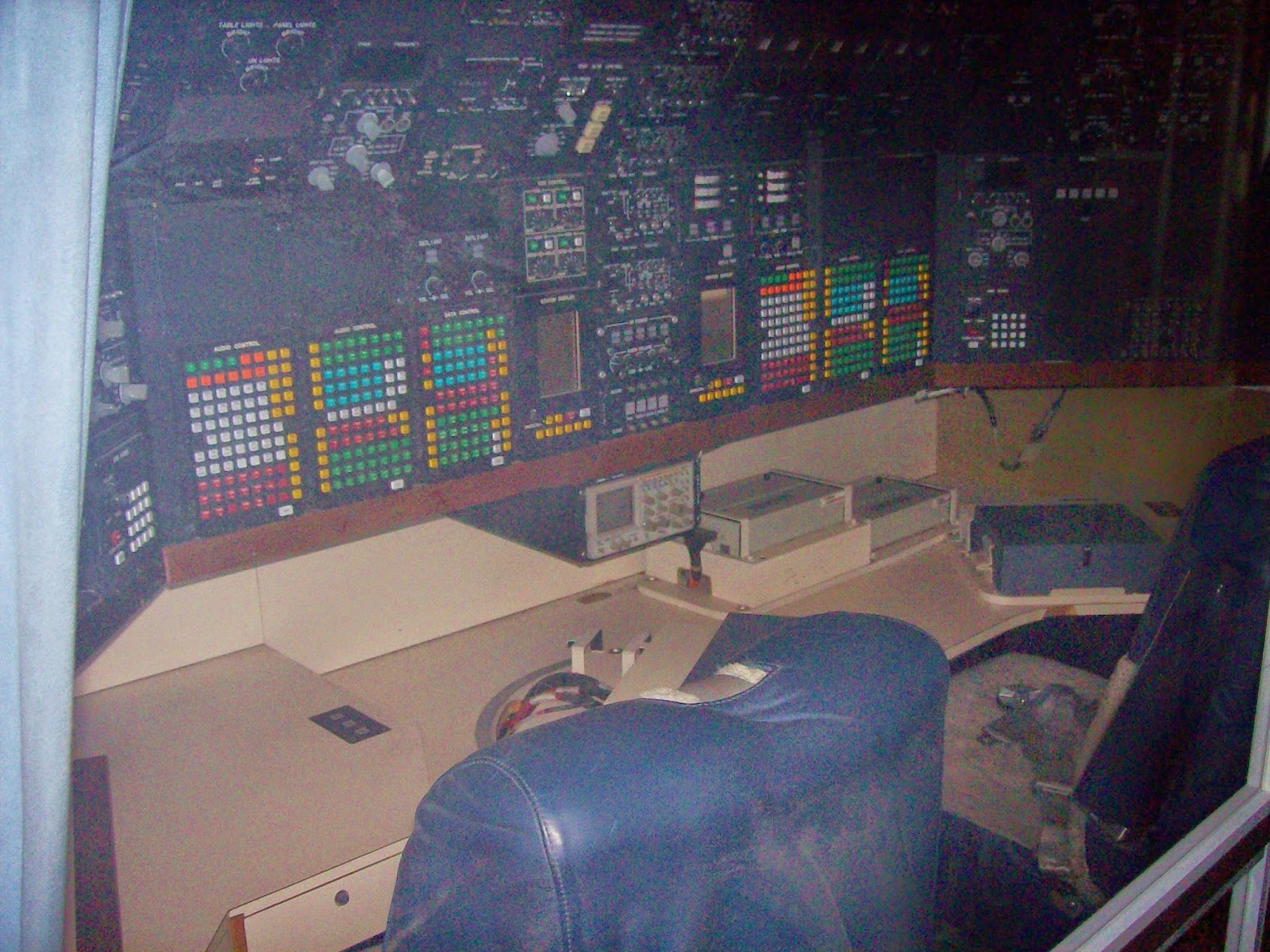
Cockpit
We got to walk through the Air Force One jet. It was amazing to see how the control panels and cockpit had changed from Roosevelt's plane. It took a crew of 7 or 8 to fly the aircraft. The jet could travel up to 604 mph with an altitude over 43,000 feet. Up to 40 passengers or more than 10 tons of cargo could be carried at a time. Compare this to spending days riding in a horse and carriage to even get across the country. Now the President could travel halfway across the world in a matter of hours!
Air Force One Accommodations
This plane saw a number of historical moments take place. It carried President Kennedy to Berlin to make his famous speech in 1963. Following President Kennedy's assassination in Dallas, Texas, Lyndon B. Johnson took the Oath of Office in the plane. There was not time for him to return to the White House, for America was without a President. Air Force One also carried President Nixon to China on his historic 1972 diplomatic visit. And in 1983, British Queen Elizabeth II flew on the plane during her visit to the United States.

Sunday, July 20, 2014

Air Force One

Ohio History
SAM 26000
Now we'll jump back to the Presidential Gallery, and the first jet built specifically for Presidential use in 1962. It carried eight US Presidents over three decades, from President Kennedy to President Clinton. The jet's official name was SAM 26000, which stood for "Special Air Mission," number 26000. The call sign "Air Force One" was also used when the President was on board to make sure everyone knew where the President's aircraft was. Because President Kennedy did not give the plane a nickname like previous Presidential aircraft, the media also began to call it Air Force One. The name stuck. Check out my Roosevelt's Plane post right here to see a side view of SAM 26000 as well - it wasn't easy to photograph these big planes!

Friday, July 18, 2014

Berlin Air Lift

Ohio History

Candy Drop
After "entering" Berlin through the checkpoint in my last post (here), we walked through a hallway lined with life-size scenes from the city and era. This was my favorite scene - German children climbing up to get a parachute from an airlift drop snagged in a tree. More likely than not, it contained candy! The Berlin Airlift dropped lots of candy for the city's children, as well as daily groceries, medical supplies, and even newspapers. But more than half of the total tonnage brought in was coal. Supplies were shipped to the European coast on freighters, then carried by train and truck to the airports to be loaded on planes. I read that they even brought a baby camel named Clarence to Berlin on one of the flights!

Wednesday, July 16, 2014

Cold War Conflict

Ohio History
Berlin Checkpoint
The Cold War conflict was expressed in a number of ways around the world. One of the first major face-offs was in Berlin, Germany soon after the post-World War II partitioning. As Britain, France, and the US prepared their sections of Berlin for a democratic self-government, the Soviet Union resisted. It cut off all ground travel to and from the city in June 1948. Unwilling to risk starting another war, the western powers began a 464-day airlift to supply West Berlin with fuel, food, and supplies. The Soviets finally lifted the blockade in May 1949, although the Berlin Airlift did continue until September. More about that in my next post.
Satellites & Missiles
The arms race was another facet of the Cold War conflict. The Air Force Museum displayed a number of satellites and missiles from the Cold War era. Fear and suspicion played just as big a part in the arms race as actual threats. Satellites for space reconnaissance were developed to scope out the armaments of the other side, especially missile development. They could not be shot down over enemy territory like planes, although much more powerful cameras were required.

Sunday, July 13, 2014

Cold War Planes

Ohio History
Post-WWII Planes
Moving on in history, we saw a number of planes on display from the Cold War era. Many were reconnaissance planes used to gather information about Soviet air defense radar systems. Pilots would fly along (and sometimes over) the border of the Soviet Union and other communist nations behind the iron curtain to spy on their technological capabilities. They traveled at night, maintaining radio silence and taking pictures with powerful cameras. The world's largest aerial camera ever built was on display in the Cold War gallery. It produced an 18"x36" negative and could detect a golf ball from an altitude of 45,000 feet.

Wednesday, July 9, 2014

Roosevelt's Chair

Ohio History
The Lift
President Franklin D. Roosevelt's plane also had the distinction of being the first airplane specifically built for Presidential use. I was still in the aircraft when I took this picture, looking down into a hatch opening in the floor of the plane. Since he was a victim of polio and unable to walk, President Roosevelt could not board the plane easily. This elevator allowed him to remain in his wheelchair and be lifted comfortably into the plane, rather than being carried up the stairs. You can see the chair ready and loaded into the lift. Roosevelt traveled to the Soviet Union in this airplane to meet with Allied leaders in 1945. It must have made headlines all across the country!

Monday, July 7, 2014

Roosevelt Plane

Ohio History
Presidential Gallery
Of course there were a number of planes used during World War II on display at the museum. This new form of high speed travel allowed this war to affect more civilians than perhaps any war in history through bombing. But the plane from the WWII era that interested me most was one used by President Franklin D. Roosevelt. It was located in the Presidential Gallery, which we accessed by riding the shuttle bus across the base. This gallery boasted the world's largest collection of planes used by U.S. Presidents, including four that we could actually get inside. President Roosevelt was the first President to fly while in office in 1943 (imagine that - it took forty years after the first flight to get a President in the air!). His plane is the silver one in the background of this picture; it was nicknamed The Sacred Cow.
Cockpit
We got to walk all the way up and down through the narrow passages of the plane. Here is a view of the instrument control panels surrounding the pilot's and copilot's seats.

Thursday, June 26, 2014

Bell Helicopter

Ohio History
Tilt-Rotor Aircraft
Next, we got to see the world's first 'helicopter plane'! Yes, this aircraft combined all the good points of a helicopter and an airplane. It could take off vertically and hover like a helicopter, while traveling at the high speeds of a plane (up to 184 mph!). It used propellers for vertical lift to take off, then turned the propellers forward once in the air to provide thrust. I think that this is why it's called a tilt-rotor aircraft. The first-ever tilt-rotor flight took place in 1958. However, after this, the plane was put on display in a museum, and the project was dropped. We never found out why . . . I guess they just missed the runway too much.

Tuesday, June 24, 2014

Civilian Planes

Ohio History
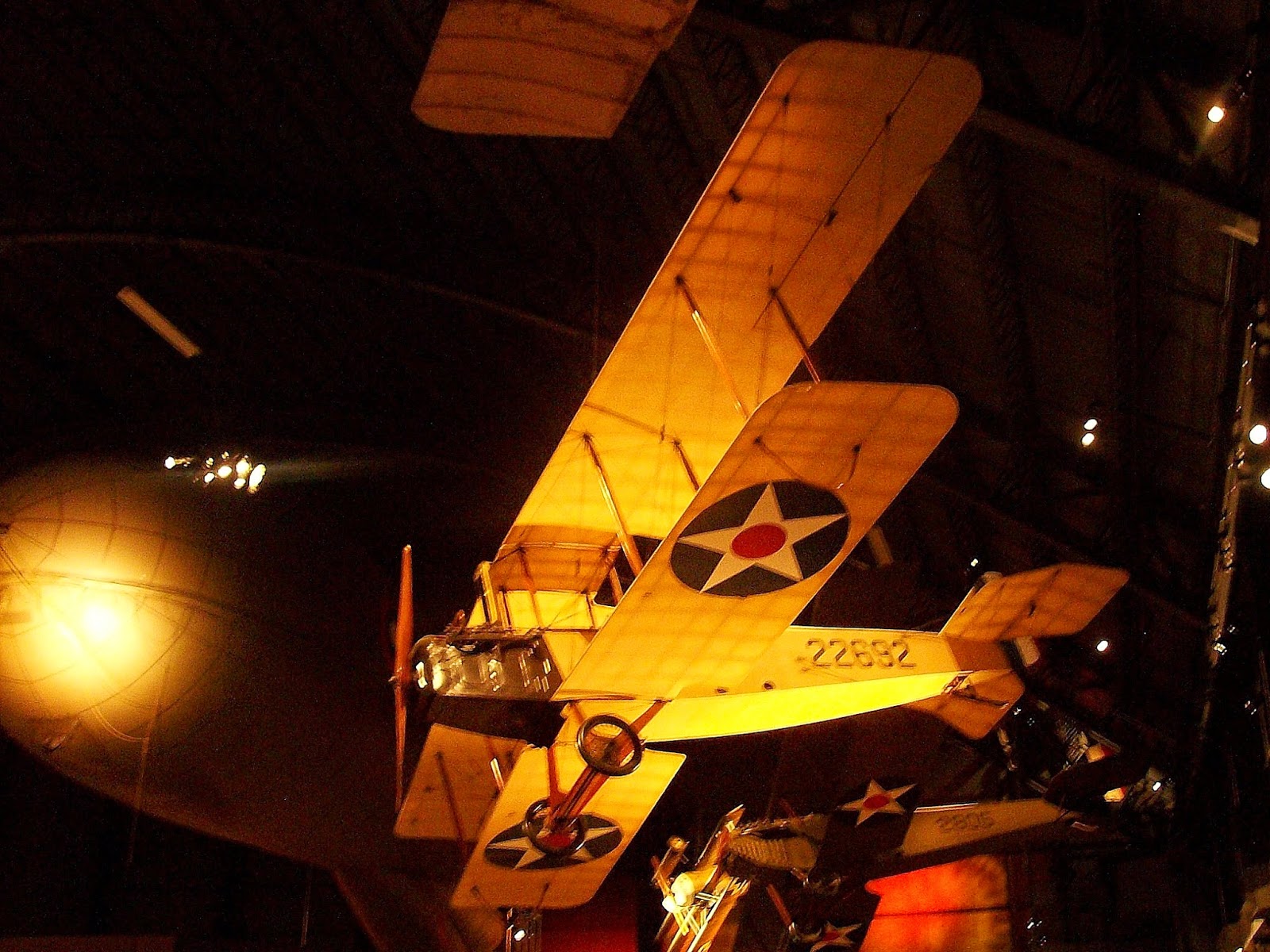
Curtiss Jenny
The purpose of this plane, the Curtiss Jenny, was mainly pilot training during World War I. The aircraft was used both for basic flight training and for bomber training. More than 6,000 of these planes were manufactured before the end of the war. Many of the surplus aircraft were sold to civilians after the war and used throughout the 1920s and 1930s. This was the first time airplanes were widely available to the public, and began widespread civil aviation. In fact, stunt pilots used them to perform tricks in the sky, either solo or in groups, known as the 'airplane circus.' The planes were also used to sell airplane rides to civilians. They would traverse the country, spending a couple days in a farmer's field before moving on.

Saturday, June 21, 2014

Bigger Planes

Ohio History
WWI Plane
 We moved on to the Caproni Ca. 36 used during World War I. Already, planes were changing the landscape of war and the destruction it could cause. The WWI planes were designed by an Italian named Caproni and used in the U.S., Great Britain, and France. As you can see, this one has a larger engine area, carries more bulk overall, and also has a water-cooling engine system. Maximum speed had now reached 87 mph, and altitude up to nearly 15,000 feet. This plane was used as a bomber, and soon was laying waste to Austrian cities in a faster and more deadly manner than yet seen in history.

Tuesday, June 17, 2014

New Planes

Ohio History
1911 Flyer
Although I'm not for certain, I believe this is the second plane which the U.S. Army purchased, a Curtiss Model D. It was one of the five planes ordered by the military in 1911. Several of its highlights were easy disassembly for transportation, speed up to 50 mph, and flying time up to 2 1/2 hours. The propellers were mounted in the back rather than the front, a deviation from the Wright design, and the control system was also different. The museum built the replica above in 1987, based on early photographs of the actual plane, which was scrapped.
Piece from a Wreck
This broken airplane piece reminded us of the many dangers involved with early air travel. It came from the first fatal airplane crash, in the Wrights' 1908 Flyer. One of the propellers malfunctioned, and the plane crashed hard to the ground. Orville Wright, the pilot, was hurt seriously, while his passenger was fatally injured in the wreck.

Saturday, June 14, 2014

Wright Plane

Ohio History
Wright 1909 Flyer
This life-size reproduction was the next plane we found on display in the Early Years Gallery. It was built in 1909, already improved-upon from the original Kitty Hawk planes. This craft could stay airborne for up to an hour, and reach speeds of 42 mph--amazing for that time I'm sure. Sadly, it was also the first plane used by the U.S. Army, which purchased it for $30,000 in 1909. Thus began the development of military aircraft. Wilbur Wright actually used the plane to give flying lessons to several new pilots. It remained the only army plane in use for almost two years, when it was retired after several crashes and repairs.

Tuesday, June 10, 2014

Air Force Museum

Ohio History
Planes
Ready for another sight-seeing jaunt? Guess what . . . we are still in Dayton! I know what you're thinking: how can there be more to see besides the Wright Bicycle shop, Dunbar House, Booneshoft Museum, Patterson House, Wright-Dunbar Interpretive Center, Carriage Hill, and even Possum Creek Metropark? I know, I've dragged you all over Dayton, but I promise, this is our last stop for now! Besides, this is a place you won't want to miss: the National Museum of the US Air Force. This museum boasts almost 750,000 square feet of display area filled with all kinds of once-airborne machines (or replicas of them). Displays span the entire history of aviation, from the first flight to modern satellites. On top of that, the museum is said to be the largest and oldest military aviation museum in the world; it first opened in 1923. It has continually expanded from its the 8100-foot area then to more than 17 acres of indoor displays now. The plane above hung in the Early Years Gallery, which was our first stop at the museum.